

Client review preview. Purchase buttons are simulated. No payments processed.← Review hub
the midlife pause Free US shipping over $99 · Subscribe & save 10%
A letter from Cynthia Thurlow, NP

“The most important supplement in my supplement stack, without question.”

Why I take creatine every day in midlife, and why I built one for women like us.

  • 30-day guarantee
  • Free US shipping over $99
  • Subscribe & save 10%

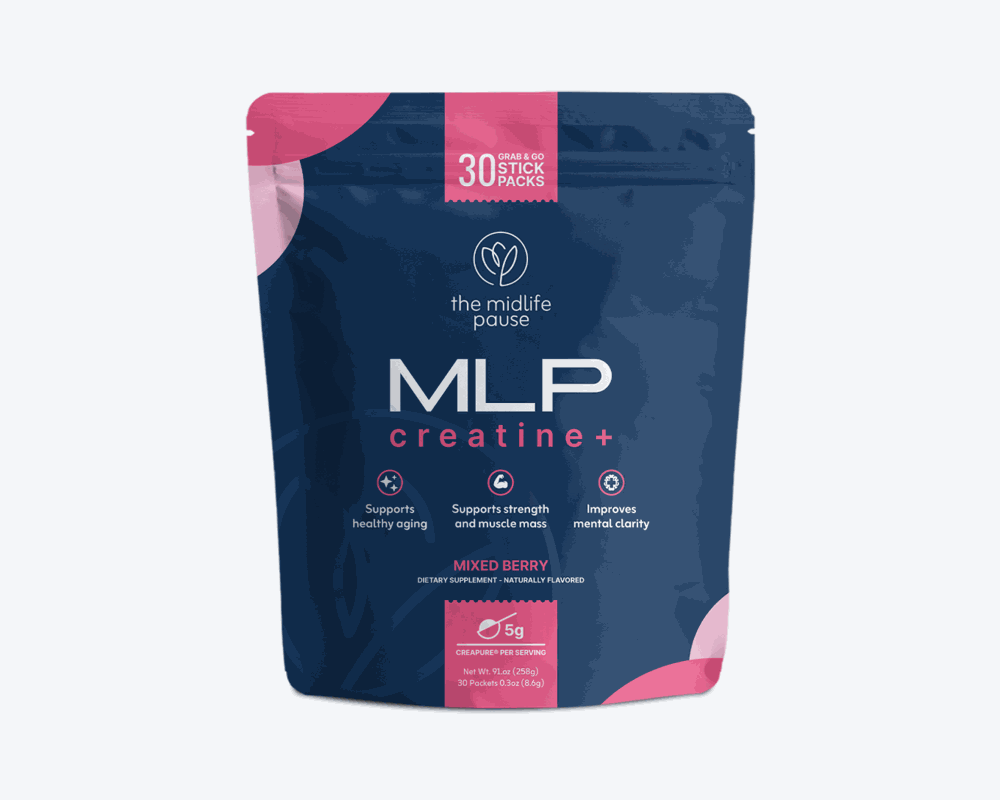
Creatine+ Advanced Formula is 5 g of creatine monohydrate paired with choline, B6, B12 and taurine, in mixed berry stick packs you can drop in a bag and take anywhere. I made it for women in their 40s, 50s and beyond who want to keep their strength, their focus and their energy for the next forty years.

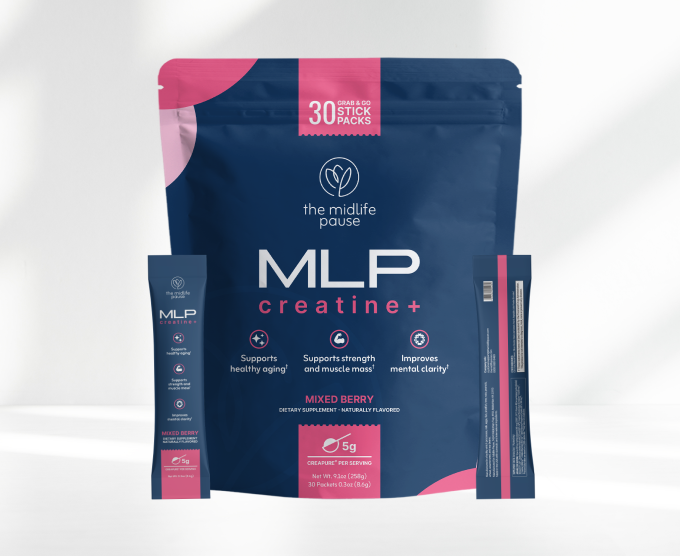
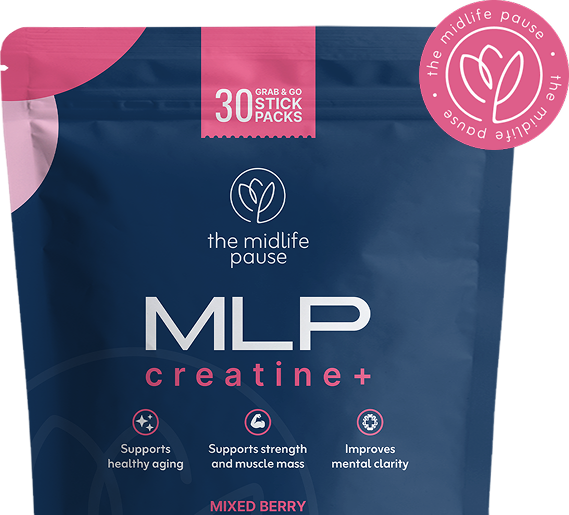
The Midlife Pause Creatine+ Advanced Formula pouch, 30 mixed berry stick packs
Let's talk about it

For years, women have asked me the same question. Here's my honest answer.

If you've listened to my podcast for any length of time, you know there's one supplement I keep coming back to. I talk about it with researchers. I talk about it in my solo episodes. I talk about it with my own family at the kitchen table. And every single time, my inbox fills up with the same thoughtful, slightly worried questions.

  • "Is creatine safe for women?"
  • "Won't it make me bulky?"
  • "I'm 54. Isn't it a little late for me?"
  • "Isn't that the stuff the guys at the gym take?"

I love those questions, because they tell me something important. They tell me that the women in my community are paying attention. You read labels. You ask what's in things. You don't want to be sold a miracle, and you've had enough of being told that feeling a little weaker, a little slower and a little foggier every year is simply "part of getting older."

Cynthia Thurlow, NP

I also know how confusing this space has become. One week a headline tells you creatine is the next big thing for women; the next week someone on social media tells you it's dangerous. You're left standing in a store aisle, or scrolling a product page at 11 p.m., trying to figure out who to believe. I don't blame anyone for feeling skeptical. Healthy skepticism is exactly what I want from the women in my community.

So I'm going to do what I've always tried to do on my show: give you the science in plain language, tell you what I do myself, and let you decide. This page is long on purpose. It's the conversation I'd have with you if we were sitting down over coffee, and I'd rather you understand why I take something than just take my word for it.

I'd rather you understand why I take something than just take my word for it.

Cynthia Thurlow, NP

Here's where I'll start. I spent nearly twenty years in clinical medicine, much of it in emergency medicine and cardiology. I've seen what happens when we wait for things to break. And in the years since, as I've shifted my focus to midlife women, to perimenopause and menopause and the decades after, I've become convinced of something:

The women who thrive in their 60s, 70s and 80s are the ones who decided, somewhere in their 40s or 50s, that strength was not optional.

Cynthia Thurlow, NP

Strength in your muscles. Strength in your bones. And yes, strength in your brain, the kind that lets you stay sharp, stay curious and keep up with the people you love.

Creatine is one of the simplest, best-studied tools I know of to support all three. When I've been asked on other people's shows which supplement I'd keep if I could only keep one, I've said it plainly: it is probably the most important supplement in my supplement stack, without question.

I didn't always feel that way. I'll be honest with you: I had my own misgivings about creatine until I really dove into the research. Like a lot of women, I'd filed it under "bodybuilder supplement" and moved on. When I finally sat down with the studies, and with researchers who have spent their careers on this one molecule, I was a little stunned by how much I'd been missing. And a little frustrated that nobody had told me sooner.

That frustration is part of why this product exists. But before I tell you about the formula, I want you to understand what's happening in your body in midlife, because once you see it, the case for creatine makes itself.

Cynthia Thurlow, NP, at home

Cynthia Thurlow, NP: nurse practitioner, host of Everyday Wellness, and founder of The Midlife Pause.

Chapter one

Why muscle, brain and bone become the midlife conversation

When women come to me in their 40s and 50s, they rarely lead with "I'm worried about my muscle." They lead with how they feel. They tell me they're doing everything they did at 35 and getting different results. Their jeans fit differently even though the scale barely moved. The weights at the gym feel heavier. The afternoon slump is real. They walk into a room and forget why.

None of that is in your head, and none of it is a character flaw. A lot of it traces back to one big shift: estrogen.

Estrogen does far more than regulate a menstrual cycle. It supports how your muscles respond to exercise and repair themselves. It plays a role in bone turnover. It influences how your brain uses energy. As estrogen fluctuates in perimenopause and then declines in menopause, every one of those systems has to adapt. And if we don't give them what they need, they adapt in the direction of "less."

I like to think of midlife health as three pillars that lean on each other.

A woman in her 50s drinking water outdoors after a workoutMuscle, bone and brain lean on each other.
01 · Muscle

Your metabolic engine

Muscle is active, hungry tissue. It helps you use the food you eat, it keeps you steady on your feet, and it's what lets you carry the groceries, lift the grandbaby and get up off the floor.

02 · Bone

Your living framework

Bone is constantly being broken down and rebuilt. One of the loudest signals it listens to is muscle pulling on it during movement and resistance training.

03 · Brain

Your most energy-hungry organ

Your brain is a small fraction of your body weight but uses a big share of your daily energy. Focus, memory and mood all depend on a steady supply.

Muscle is not about vanity

We lose muscle gradually with age, starting earlier than most people expect, and the pace can pick up around menopause if we're not intentional. That matters for far more than how we look in a sleeveless top. Muscle is where a large share of the glucose from our meals ends up. It's a big part of what keeps our metabolism humming. It's our balance, our posture and our independence.

I say this on my show all the time: protein and resistance training are the foundation. Nothing in a pouch replaces lifting something heavy for you and eating enough protein at your meals. But creatine is one of the few supplements with a real body of research showing it can help your muscles get more out of the work you're already doing.

Bone listens to muscle

I've had wonderful conversations on Everyday Wellness with Dr. Darren Candow, one of the researchers who has spent the most time studying creatine in older adults. One of the most important things he emphasizes is that creatine is not a bone supplement on its own. Take creatine and sit on the couch, and you shouldn't expect much for your skeleton. The magic, if we want to call it that, is in the pairing: creatine plus resistance training, plus movement, over time.

That's the honest version, and it's the version I want you to hear. Creatine is a tool that supports the work. It is not the work.

The brain needs fuel, too

This is the part that surprised me most when I started reading the research, and it's the part many of my listeners find most interesting. Creatine isn't only stored in muscle. Your brain uses it as well, as part of the system that recycles cellular energy quickly when demand spikes. Think of long workdays, poor sleep, travel across time zones, and the mental load so many women in midlife are carrying.

I'll share more about how I personally use it on those days in a moment. For now, I want you to hold on to one idea: in midlife, muscle, bone and brain are all asking for more support at exactly the moment many of us are being told to simply "slow down."

I don't accept that. I don't believe women have to accept weakness as a normal function of aging. And I suspect, since you're still reading, that you don't either.

Already know you want creatine in your routine? Skip ahead to the supply options See options

Chapter two

What creatine is, and what it isn't

I've been really looking forward to this part of the conversation, because I think in many ways creatine is so misunderstood. Let's clear it up.

Creatine is a natural compound your body already makes. Your liver, kidneys and pancreas build it from amino acids, and you get a little more from foods like red meat and fish. Most of it is stored in your muscles, with a smaller but important amount in your brain.

Its job is energy. Every cell in your body runs on a molecule called ATP. When you ask your muscles or your brain to work hard, they burn through ATP fast, and creatine (stored as phosphocreatine) helps regenerate it on the spot. More creatine on hand means more capacity to recycle that energy when you need it most: the last few reps of a set, the climb up the hill, the end of a long and demanding day.

Supplementing tops up your stores. Your body makes some creatine, but the amount you make and the amount you get from food don't always fill your tank, especially if you eat little red meat or follow a mostly plant-based diet. Taking creatine consistently raises what's stored in your tissues over a few weeks. That's why consistency matters far more than timing.

Creatine monohydrate specifically is the form used in the vast majority of the research. It's one of the most thoroughly studied supplements available, full stop. That's the only form I take, and it's the only form in Creatine+.

Running low

Lower creatine stores

  • Less phosphocreatine on hand when demand spikes
  • ATP gets recycled from a smaller reserve
  • More common with little red meat or a plant-based diet
Topped up

A full tank

  • More phosphocreatine stored in muscle and brain
  • More capacity to recycle ATP in the last reps and the long days
  • Works best alongside resistance training
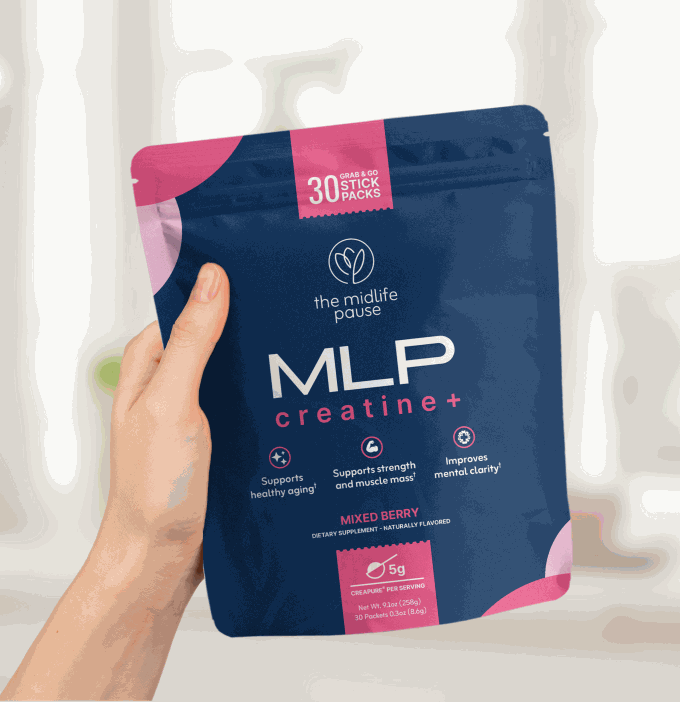
A hand holding a Creatine+ pouch

Now for what it isn't. These are the questions I get most, and the answers I give.

Myth

"It's a steroid or a hormone."

No. Creatine is a compound built from amino acids that your body makes every day. It isn't a hormone, it doesn't act like one, and it isn't a replacement for hormone therapy.

Myth

"It will make me bulky."

No. Women building visible bulk takes years of very specific training and eating. What creatine supports is strength and the muscle you're working to keep.

Myth

"It will damage my kidneys."

On my podcast, Dr. Darren Candow walked me through a two-year trial in menopausal women taking creatine every day, where kidney and liver function were tracked and looked no different from placebo. If you have a kidney condition or any chronic health concern, talk with your healthcare provider first.

Question

"Will it make my hair fall out?"

This is one of the most common questions I'm asked, and I understand the worry. Hair changes in midlife have many possible causes, shifting hormones among them. If hair shedding is already a concern for you, bring it to your healthcare provider before starting anything new.

Myth

"It makes you bloated."

Some people get bloating and GI upset, and that's usually from the cheap stuff. Quality matters. So does the form, and so does the dose.

Myth

"It's a stimulant."

No. Creatine has no caffeine and doesn't give you a buzz. It works quietly in the background, which is exactly why daily consistency is the whole game.

What about the scale?

Here's one more thing I want you to know before you start, because I'd rather you hear it from me. When you begin taking creatine, some women see the scale move up a little in the first weeks. That's typically water being drawn into your muscle cells, which is part of how creatine works. It is not fat, and it isn't the puffy, under-the-skin water retention people worry about.

If you're someone who weighs yourself every morning and feels discouraged by small fluctuations, I understand. I'd gently suggest paying attention to other markers for the first month: how your clothes fit, how your workouts feel, how you feel at 3 p.m.

Chapter three

Why women were left out of the creatine conversation

Cynthia Thurlow at home in her kitchen

Picture the creatine aisle you've probably walked past. Big black tubs. Flames and lightning bolts. Words like "shred" and "mass." A photo of a twenty-two-year-old man flexing in a mirror.

Nobody was marketing creatine to a 52-year-old woman who wants to hike with her kids, keep up at work and stay independent for decades. For years, most of the conversation, and a lot of the early research, centered on young male athletes. The message women absorbed was clear: this isn't for you.

And yet the physiology points the other way. Women tend to have lower creatine stores than men. From my perspective, that means women stand to benefit from supplementing at least as much as men do, if not more.

Add midlife on top of that. Estrogen shifts. Muscle becomes a little harder to hold on to. Sleep can get choppy, and anyone who has lain awake at 3 a.m. knows how that affects the next day. It's hard to imagine a group of people for whom a simple, well-studied energy support makes more sense.

How I got on the creatine bandwagon

I've been on the creatine bandwagon for years now, and I'm not shy about telling people it's a daily non-negotiable for me. What changed my mind was the research, and the researchers. Conversations with people like Dr. Darren Candow and Dr. Stacy Sims on my show helped me see creatine as a foundational supplement for women, not a niche product for athletes.

I also watched what happened at home. All my kids take it. My husband takes it. My mother, who is 79, takes it. My youngest son listened to one of my creatine episodes and came to me afterward with his own questions about the brain research. When a teenager voluntarily listens to his mother's podcast and changes his routine, you know the information landed.

That's what I want for you: not a trend, not a quick fix, but a simple daily habit you understand and can stick with. One that I'd feel good recommending to my own mother. Because I do.

Women tend to have lower creatine stores than men. It was never a "guy supplement." We simply weren't the ones it was marketed to.

Cynthia Thurlow, NP

"All my kids take it. My husband takes it. My mother, who is 79, takes it. This is the creatine I built for all of us."

Get the same creatine
Chapter four

What the research in women suggests, honestly

I'm a nurse practitioner, and my audience trusts me to do the research so they don't have to wade through every paper themselves. I take that seriously. So here is what I'm comfortable telling you, and just as importantly, what I'm not.

Strength, when it's paired with training

Studies in postmenopausal women have found that those who took creatine alongside resistance training gained more strength than women who did the same training without it. That's the pattern I see across this research: creatine helps you get more from the work. It doesn't replace the work.

Bone, with an important asterisk

Researchers have also studied creatine plus resistance training in postmenopausal women and looked at markers of bone health. The results are encouraging, and this is an area of active study. But I'll repeat the asterisk from my conversations with Dr. Candow: the training is non-negotiable. In one longer study I read about, even something as simple as regular walking appeared to matter. Move your body. Creatine supports the signal; it doesn't send it for you.

The brain, especially under stress

Reviews of the research have looked at creatine and cognitive performance, with some of the more interesting findings in older adults and in people under stress, like sleep deprivation. This research is younger and still growing, and I want to be careful not to overstate it. What I can tell you is that it's a big part of why I describe creatine as multi-purposeful: a supplement that supports your muscles and gives your brain's energy system some backup too.

Cynthia Thurlow reading in front of a bookshelf

How I use it on hard days

I travel a lot for work, and jet lag is one of my least favorite parts of it. When my husband and I came home from a trip a while back, I went digging into Dr. Candow's work on creatine, sleep deprivation and brain stress, and it changed how I think about those days. I'll give you a very human example: we once went to a concert, didn't get home until two in the morning, and I was working the next day on about five hours of sleep. You'd better believe I leaned on my creatine that day.

That's my personal practice, and I share it so you know how I think about it. It isn't a prescription. The label directions for Creatine+ are one stick a day. If you're curious about anything beyond that, bring it to your own practitioner and make the decision together.

What I won't tell you

  • I won't tell you creatine is a replacement for hormone therapy, strength training, protein or sleep.
  • I won't tell you that you'll feel different overnight. Creatine builds up in your system over weeks.
  • I won't promise you a number on the scale. That isn't what this is for.

What I will tell you is that creatine monohydrate is one of the most researched supplements available, that it's generally very well tolerated in healthy adults, and that for women in midlife who are putting in the work, it's one of the smartest additions I know of. Test, don't guess: pay attention to how you feel and how your training goes, and let your own experience be part of the evidence.

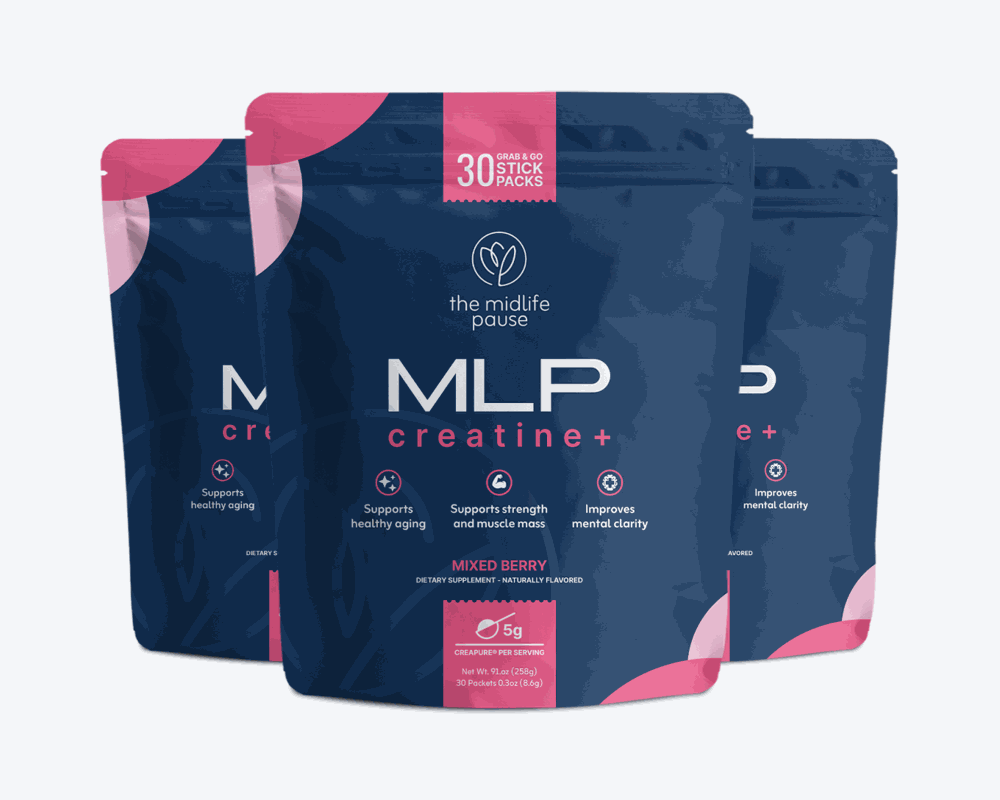
Three pouches of Creatine+
Make it a daily habit

90 stick packs, one a day

The three-pouch supply covers the three-to-four-week build-up and keeps going. Free US shipping, subscribe & save 10%.

See the supply options
Before we get to the formula

Creatine works best on a strong foundation

I want to pause here, because I'd be doing you a disservice if I let you think a supplement is the answer by itself. It isn't. The women I see doing best in midlife have built a few simple habits, and creatine sits on top of them. If you only have the budget or the bandwidth for a couple of changes right now, here's the order I'd put them in.

Cynthia Thurlow by a window

1. Protect your sleep

Sleep is where so much of our repair happens, and it's often the first thing to unravel in perimenopause. I know that "just get more sleep" can feel like a cruel joke when you're awake at 3 a.m. But treat it as a priority, not an afterthought: a consistent bedtime, a cool, dark room, less alcohol and less late-night scrolling. Everything else works better when you're rested.

2. Eat enough protein

I find most, if not all, of the women I talk to are undereating protein. The official recommended amount was designed as a minimum, not an optimal target for a woman trying to hold on to her muscle in midlife. Building your meals around a generous serving of protein helps with satiety, supports your metabolic health and gives your muscles the raw materials they need to respond to training.

3. Lift something heavy for you

Resistance training is the signal that tells your muscles, and through them your bones, that they're still needed. It doesn't have to be a barbell in a crowded gym. Bands, dumbbells, body-weight squats and lunges at home all count. What matters is that it's challenging for you and that you keep doing it, week after week.

4. Move every day

Walking is underrated. It supports your metabolic health, your mood and your joints, and it's one of the easiest habits to stack with everything else. A walk after meals is one of my favorite simple practices.

5. Then add creatine

Once those pieces are in place, creatine is one of the most useful things you can add. It helps you get more from the training. It gives your brain's energy system some backup on the long days. And because it's a single stick a day, it's one of the easiest habits in this whole list to keep.

I share this order on purpose. If you're doing none of the first four, please don't expect a pouch to do the heavy lifting. But if you're already putting in the work, or you're ready to start, creatine is the support I'd want in your corner, and it's the support I have in mine.

Supplements fill gaps. They don't replace the foundation. That's how I've always taught it, and it's how I built this product.

Cynthia Thurlow, NP
Chapter five

Why I didn't just sell plain creatine

When I decided to put my name on a creatine for The Midlife Pause, the easy move would have been to scoop plain monohydrate into a tub, slap on a label and call it a day. Plenty of good plain creatine exists, and I'm not going to pretend otherwise.

But I kept thinking about the women I talk to every day, and about why I personally take creatine. For me it isn't only about the gym. It's about sleep architecture, focus, the long days and the travel days. So we asked a different question: what would a creatine built around a midlife woman's whole day look like?

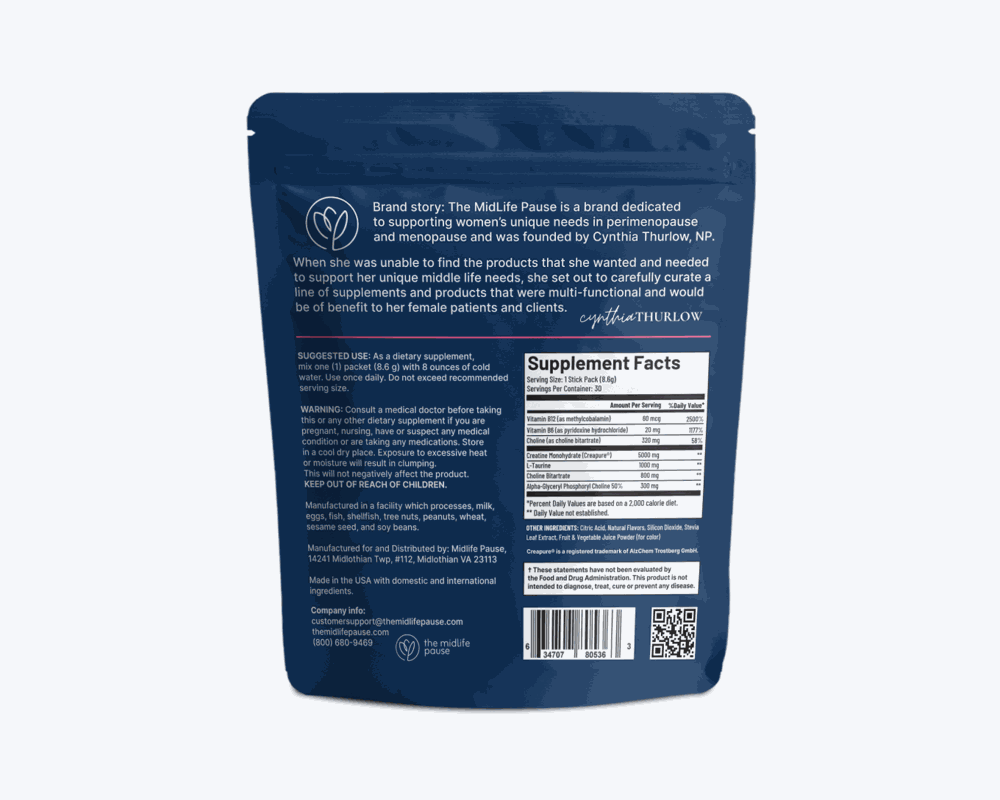
Our answer was to start with a full 5 grams of creatine monohydrate, the amount studied as a daily maintenance dose, and then add nutrients that support the brain's own chemistry and the body's energy metabolism. In my words from an interview about the formula: we added things to the creatine monohydrate with the brain in mind, including alpha-GPC and some B vitamins.

Quality mattered just as much as the recipe. The cheap stuff is where so many of the bloating complaints come from, so we use a premium, research-grade creatine monohydrate. And I believe in being transparent with you: if a future production run lists a different premium creatine supplier on the facts panel, it's the same monohydrate at the same 5 grams. I'll always tell you when something changes.

Every ingredient had to earn its place, and every ingredient had to play well with other supplements you might already take. Here's what's in each stick.

Creatine+ pouch with two stick packs
5 g per stick The foundation

Creatine monohydrate

The most researched form of creatine, at the full 5 g daily dose. It tops up your muscle and brain stores over time to support strength, workout performance and cellular energy, especially when you pair it with resistance training.

Amount: see facts panel Brain support

Choline complex

Choline bitartrate plus alpha-GPC. Choline is the building block your body uses to make acetylcholine, a messenger involved in memory, focus and muscle control. Alpha-GPC is a well-absorbed form of choline.

Amount: see facts panel Energy metabolism

Vitamin B6

B6 helps your body turn food into usable energy and helps make several of the brain's chemical messengers. It supports normal energy production and muscle function.

Amount: see facts panel Energy + nervous system

Vitamin B12 (methylated)

A methylated form of B12, which supports normal energy metabolism and a healthy nervous system. Many women in midlife pay closer attention to their B12, and this is one easy way to include it.

Amount: see facts panel Muscle function

L-taurine

An amino acid found naturally in high amounts in muscle, heart and brain tissue. It's included for its role in muscle function and post-workout recovery.

Mixed berry The daily habit

Flavor you'll look forward to

A light mixed berry flavor that dissolves in cold water. Because the best supplement in the world does nothing sitting in your pantry.

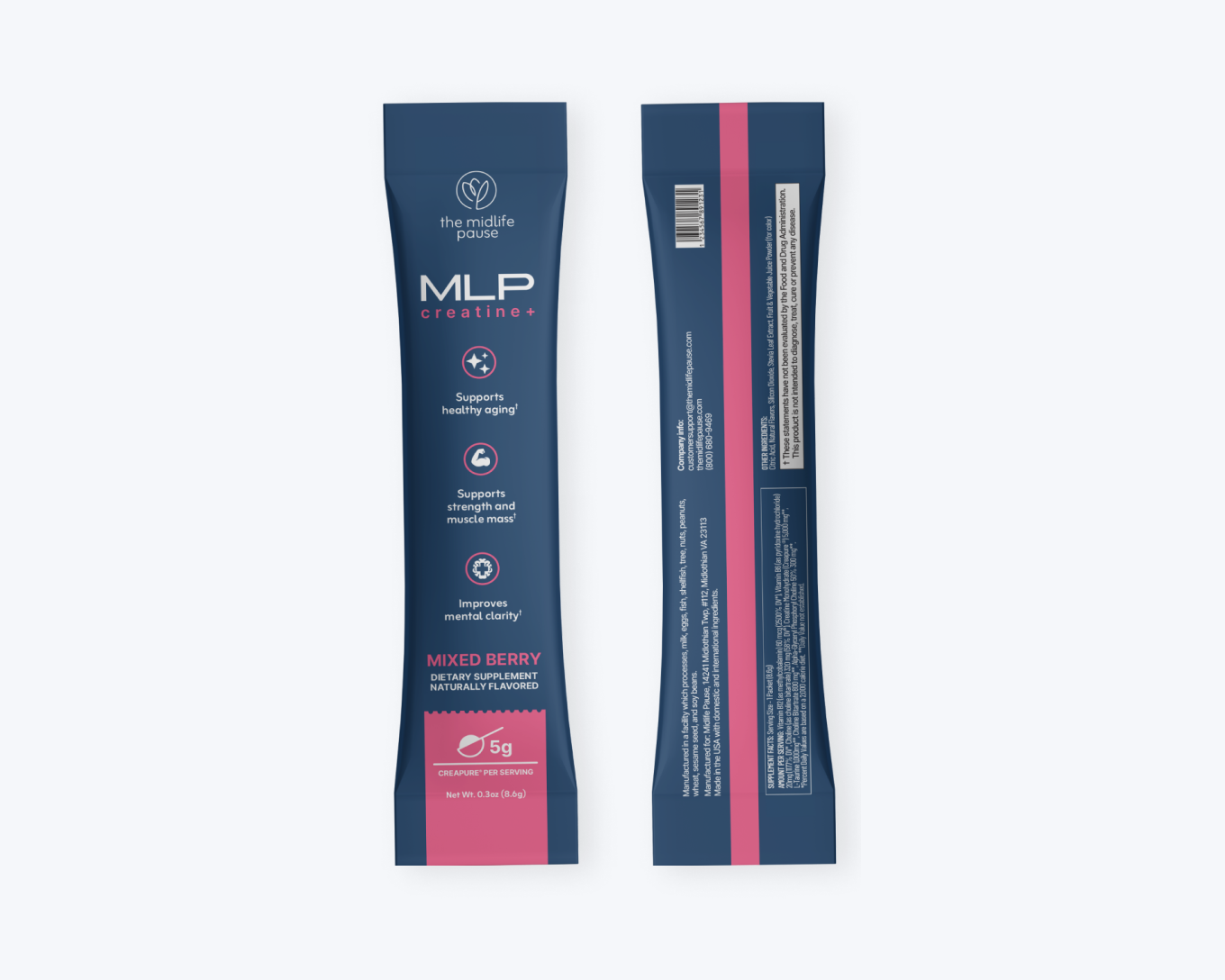
Two Creatine+ stick packs, front and back
You asked, we listened

Why stick packs instead of a tub

When I asked my community how they wanted to take their creatine, the answer was overwhelming: stick packs. And the more I thought about it, the more it made sense.

A tub lives on the counter, and on the counter it stays. A stick pack goes in your purse, your gym bag, your carry-on and your desk drawer. There's no scoop to find, no measuring, no powder on the counter and no guessing whether that was a level scoop or a heaping one.

  • Exactly 5 g of creatine every time. The dose is measured for you.
  • Built for travel. Jet lag days are the days I least want to skip.
  • Easy to share. Hand one to your sister, your daughter or your husband.
  • 30 sticks per pouch. One pouch is one month of daily servings.

Consistency is the whole game with creatine. Anything that removes friction from your daily habit is worth doing, and this is the single easiest way I know to make creatine automatic.

The smart-shopper question

"Why not just buy plain creatine?"

It's a great question, and plain creatine monohydrate is a perfectly good choice. Here's an honest, side-by-side look at how the common options differ, so you can choose what fits your life.

 Creatine+ stick packsPlain creatine powderCreatine gummies
Creatine per serving5 g creatine monohydrate in every stickUsually about 5 g per level scoopVaries by brand; check how many gummies it takes to reach 5 g
Form of creatineMonohydrate, the most researched formUsually monohydrateVaries; read the label
Choline, B6, B12, taurineIncluded in every stickNot includedRarely included
MeasuringNone; pre-measuredScoop and level each dayCount and chew several
TasteMixed berry, dissolves in waterUnflavored; mix into somethingCandy-like
SugarNo sugar addedNoneOften contain sugars or sugar alcohols; check the label
TravelIndividual sticks for purse, gym bag or carry-onTub stays home, or bag it yourselfJar; can be sensitive to heat
Formulated forWomen in midlife, by a nurse practitionerEveryoneVaries

If you want pure, single-ingredient creatine, that's a good choice too. If you want the full 5 g plus brain and energy co-factors in a format you'll carry everywhere, that's what I built Creatine+ for.

The full 5 g, plus the co-factors, in a stick you'll carry.1, 2 or 3 pouches · subscribe & save 10% · 30-day guarantee
Choose your supply
Simple on purpose

How to take Creatine+

No loading phase, no complicated protocol, no special timing. One stick a day, every day.

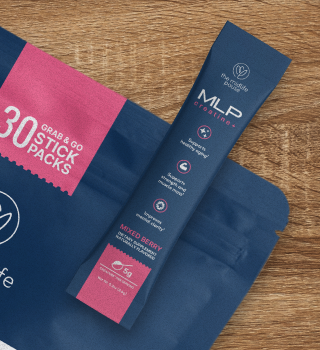
A Creatine+ stick pack on a wooden table

Tear one stick

One stick is one serving: 5 g of creatine monohydrate plus the full co-factor blend.

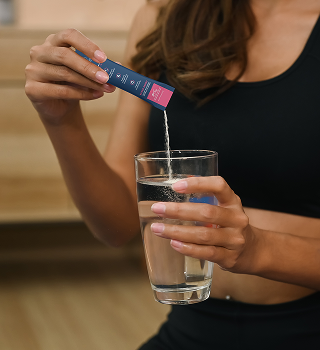
Pouring a Creatine+ stick into a glass of water

Pour into 8–10 oz of cold water

Or your favorite beverage. Stir or shake well until it's fully dissolved.

A woman drinking a pink Creatine+ drink

Sip and enjoy

Whenever you'll remember it. The best time to take creatine is the time you'll take it consistently.

A few tips from my own routine

  • Timing is flexible. Researchers I've spoken with agree it doesn't have to be pre-workout or post-workout. It's really whenever you can remember to take it consistently.
  • If you practice intermittent fasting, take it in your eating window. That's what I recommend to my community.
  • Coffee is fine. One cup of coffee is not going to offset the benefits, so there's no need to panic about your morning latte.
  • Pair it with movement. Resistance training two or three days a week, plus daily walking, is where creatine does its best work.
  • Stay consistent. Creatine isn't a quick fix. It works by building up in your system, so take it every day, including rest days.
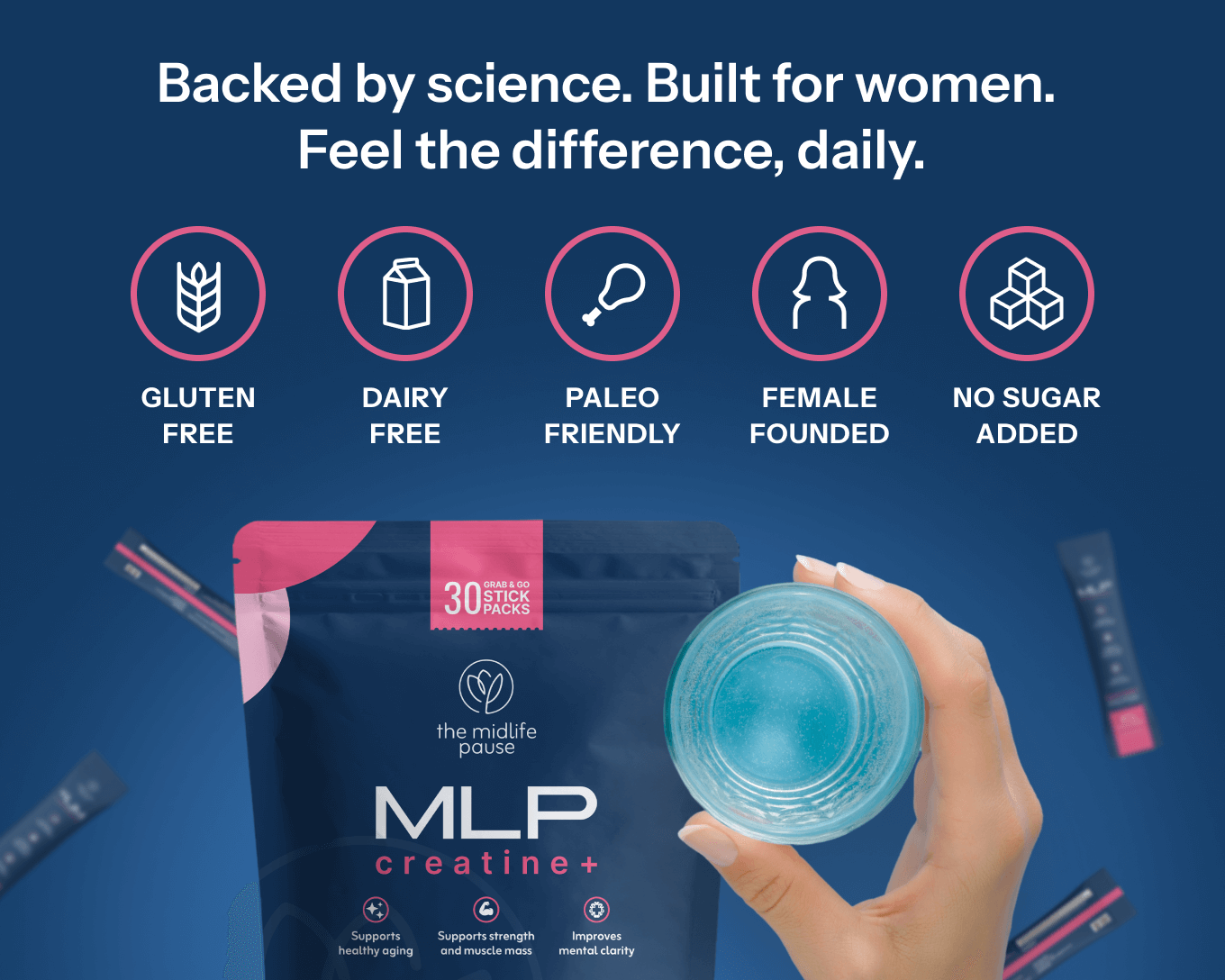
Creatine+ pouch with a glass of water and a stick pack
Honest expectations

What the first weeks tend to look like

I'd rather set honest expectations than sell you a fantasy. Everyone's body, training and starting point are different, so think of this as what women commonly describe, not a promise of what you'll feel.

  1. 1Week one

    Building the habit

    This is about routine. Find your moment, whether it's with breakfast, after a walk or mid-afternoon. Notice how it mixes and how you like the taste. Some women see the scale move slightly as their muscles take on water; that's normal and expected.

  2. 2Weeks two to four

    Filling the tank

    Taken daily, creatine gradually builds up in your muscles over roughly three to four weeks. This is where consistency pays off. Keep training and keep eating your protein. Some women start to notice that their workouts feel a little different; others notice nothing yet, and that's fine too.

  3. 3Weeks four to eight

    Paying attention

    With your stores topped up, this is a good time to check in. Look at your training log. Are you lifting a little more, or doing an extra rep? How do the long days feel? Test, don't guess. Your own notes will tell you more than any page can.

  4. 4Month three and beyond

    Part of your foundation

    This is where creatine belongs: a quiet daily habit supporting the work you're putting in, month after month. That's why I suggest a subscription: you never run out, and you never have to think about it.

One more thing: if you ever have questions about whether creatine is right for you alongside your medications or a health condition, please talk with your healthcare provider. I always say that on my show, and I mean it.

From our customers

In their own words

Unedited words from women who take Creatine+, shared in reviews on themidlifepause.com.

I love the Midlife Pause Creatine! I definitely am lifting more weight and my trainer has noticed.
Michelle G.
Customer review, themidlifepause.com
It is definitely my favorite creatine that I have used.
Lisa Denham
Customer review, themidlifepause.com

Individual experiences vary. Reviews reflect personal experiences and are not a guarantee of results.

Choose your supply

Start your Creatine+ habit today

Creatine works through consistency, so I suggest starting with a three-month supply. On subscribe & save, three pouches (90 stick packs) come to $107.97, or about $1.20 a serving, and ship free in the US.

Choose a plan
Choose how many pouches
3 pouches (90 stick packs) · Subscribe & save, delivers every 90 days Today$107.97

$107.97 today, then $107.97 every 90 days until you cancel. That is 10% off the one-time price on every delivery. No commitment: skip, change or cancel anytime. Ships free in the US.

Add to cart
Secure Shopify checkout 30-day guarantee 2 free bonus guides

US shipping only.

Included with every order

Two free guides from me to you

Whichever supply you choose, I'll include two of my own digital guides, because a supplement works best as part of a bigger picture.

Free bonus #1 · PDF

Cynthia's Self Check

A quick, two-minute self check to help you take stock of where you are right now in midlife, so you can see which habits deserve your attention first.

Free bonus #2 · PDF

Cynthia's Gut Guide

A practical guide drawn from the work behind my book The Menopause Gut, for women who want to understand how the gut fits into the midlife picture.

Delivered digitally with your order.

Try it with our 30-day guarantee

I want you to feel good about this decision. Creatine+ is covered by our 30-day guarantee. If it isn't the right fit for you, contact our customer support team within 30 days of your order at customersupport@themidlifepause.com or (800) 680-9469, and we'll walk you through your options under our refund policy.

See our refund policy for full details.

Is this right for you?

Creatine+ is for you if you're ready to invest in strength

I'm not a fan of oily sales tactics, and I'm not going to pressure you. People trust me because I tell them the truth, including when something isn't a fit. So let me be clear about who I made this for.

This is for you if…

  • You're in perimenopause, menopause or beyond, and you want to hold on to your strength and energy for the long haul.
  • You're strength training, or you're ready to start, and you want to get more from the work you're doing.
  • You care about focus and mental energy as much as muscle.
  • You want a clean, simple daily habit, not a cabinet full of tubs and scoops.
  • You travel, commute or live a busy life, and you need something that goes where you go.

Please check with your practitioner first if…

  • You're pregnant or nursing. I always say to use an abundance of caution when you're growing a human.
  • You have a kidney condition or any chronic health condition, or you take prescription medications.
  • You've been told by your healthcare provider to avoid any of the ingredients in this formula.

If you're in the first group, I'd love for you to try Creatine+. Start with the supply that fits your budget and your plans. You'll want enough to reach that three- to four-week mark and then keep going, which is why I suggest the three-pouch subscription as a starting point.

This is the same creatine I take, the same creatine my husband and kids take, and the same creatine my 79-year-old mother takes. I made it for the women I talk to every day. I hope you'll join us.

Cynthia Thurlow
Cynthia
Cynthia Thurlow, NP
Founder, The Midlife Pause

Your supply is one click away. Three pouches and subscribe & save are already selected for you. Change anything you like.

Choose your supply
Cynthia Thurlow holding her book The Menopause Gut
About Cynthia

Nurse practitioner, educator and fellow midlife woman

Cynthia Thurlow is a nurse practitioner who spent nearly twenty years in clinical medicine, much of it in emergency medicine and cardiology, before dedicating her work to helping women navigate perimenopause, menopause and the decades after.

  • BSN and MSN from Johns Hopkins University
  • Host of Everyday Wellness, a podcast on midlife hormones, menopause and science for women 35+, with more than 700 episodes
  • Author of Intermittent Fasting Transformation and The Menopause Gut (Avery / Penguin Random House)
  • Two-time TEDx speaker
  • Founder of The Midlife Pause

She founded The Midlife Pause to empower women with thoughtful, transparent solutions, and she lives near Washington, D.C., with her husband and two sons.

"Cynthia has changed my life through her programs, through her guests and podcasts, through her product and supplement recommendations, through her food guides, through her safer home tips. […] It will be your greatest gift to yourself to make the decision to work with Cynthia."
Mandy H. · shared on cynthiathurlow.com
The Menopause Gut book cover Everyday Wellness with Cynthia Thurlow podcast cover Listen to Everyday Wellness wherever you get your podcasts.
Your questions

Frequently asked questions

Is creatine safe for women in midlife?

Creatine monohydrate is one of the most researched supplements available, and it's generally very well tolerated by healthy adults, including women in midlife and older. On my podcast, Dr. Darren Candow walked me through a two-year trial in menopausal women taking creatine every day, where kidney and liver function were tracked and looked no different from placebo. If you have a kidney condition, talk with your healthcare provider first.

That said, if you have a kidney condition or any chronic health condition, take prescription medications, or are pregnant or nursing, please talk with your healthcare provider before starting. That's what I'd tell a friend, and it's what I'm telling you.

Will it make me bulky, puffy or bloated?

No, it won't make you bulky. Creatine supports strength and the muscle you're working to keep; building visible bulk takes years of very specific training and eating.

On bloating: some people get bloating and GI upset, and in my experience that's usually from the cheap stuff. Creatine+ uses quality creatine monohydrate at the standard 5 g dose. Some women do see the scale tick up slightly in the first weeks, which is typically water moving into muscle cells, not fat.

I don't lift heavy weights. Is this still for me?

Creatine does its best work alongside resistance training, so I'd encourage you to add some, even two or three short sessions a week with bands, dumbbells or your own body weight. It doesn't have to be a barbell. Daily walking matters too.

Many women also take creatine for the brain and energy side of the story. But I'll always be honest with you: creatine supports the work; it doesn't replace it.

When will I notice anything?

Creatine builds up in your muscles over time. Taken daily, it generally takes about three to four weeks to top up your stores, so give it at least a month of consistent use before you judge it. Some women notice changes in their workouts after that; others notice more subtle things. Everyone is different, and I can't promise what you'll feel.

My advice: keep a simple training log and check in with yourself around week four and again around week eight. Test, don't guess.

Can I take it with HRT or my other supplements?

From my perspective, creatine plays well with other supplements. It isn't a hormone, and it is not a replacement for HRT; think of it as a separate tool that supports the work you're doing. Because everyone's situation is different, please review your full supplement and medication list with your prescribing provider, especially if you take prescription medications.

I practice intermittent fasting. Does it break my fast?

I recommend taking Creatine+ in your eating window. It's a flavored drink, and the simplest approach is to have it with or around a meal. Many women like to take it after a workout or alongside their first meal of the day.

What does it taste like, and what can I mix it with?

Creatine+ has a light mixed berry flavor. Mix one stick into 8 to 10 ounces of cold water or your favorite beverage, and stir or shake until it's fully dissolved. You can have it with your morning coffee routine too; one cup of coffee is not going to offset the benefits.

How does subscribe & save work?

When you choose subscribe & save, you get 10% off the one-time price on every delivery. You pick the delivery frequency: every 30, 60 or 90 days. There's no commitment, and you can cancel anytime. If you choose the three-pouch supply, a 90-day delivery schedule lines up with 90 daily servings.

Free US shipping applies to orders over $99. We currently ship within the US only.

What is your guarantee?

Creatine+ is covered by our 30-day guarantee. If it isn't the right fit for you, contact our customer support team at customersupport@themidlifepause.com or (800) 680-9469 within 30 days of your order, and we'll walk you through your options under our refund policy.

How is this different from the unflavored MLP Creatine?

Our unflavored MLP Creatine Monohydrate is a single-ingredient powder: 5 g of creatine monohydrate per scoop, with nothing else added. It's a great choice if you want pure creatine to mix into your own drinks.

Creatine+ Advanced Formula starts with the same 5 g of creatine monohydrate and adds choline (bitartrate and alpha-GPC), vitamin B6, methylated B12 and L-taurine, in a mixed berry flavor and individual stick packs you can take anywhere.

Three pouches of Creatine+ Advanced Formula

Strength is not optional. Let's build it together.

5 g of creatine monohydrate plus choline, B6, B12 and taurine, in mixed berry stick packs that go wherever you go. Formulated by a nurse practitioner for women in midlife. Two free guides with every order, and a 30-day guarantee.

  • Subscribe & save 10%
  • Cancel anytime
  • Free US shipping over $99

P.S. If you only remember one thing from this letter, let it be this: creatine supports the work, it doesn't replace it. Lift something that's heavy for you, eat your protein, protect your sleep, and let Creatine+ be the simple daily habit that helps you get more from all of it.

P.P.S. Not sure which supply to choose? Creatine takes a few weeks to build up in your system, so I'd suggest at least enough to get you past the one-month mark. The three-pouch subscription gives you 90 servings at about $1.20 each, free US shipping and the option to change or cancel anytime.